Loft Conversion Party Wall Agreement: A Professional Buying Guide for 2026
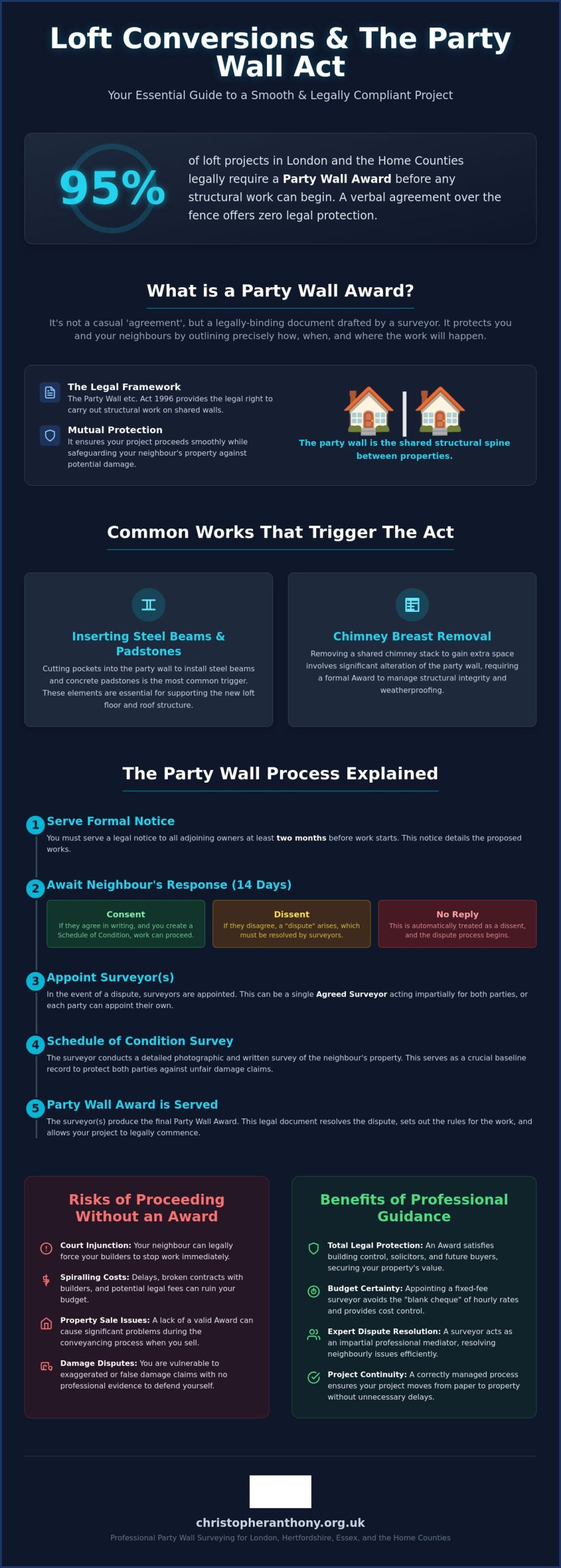
Did you know that approximately 95% of loft projects in London and Hertfordshire legally require a loft conversion party wall agreement before a single steel beam is installed? It's a staggering figure that many homeowners overlook until their builder is actually ready to start. You've likely spent months perfecting your architectural drawings; the last thing you need is a legal injunction or a disgruntled neighbour halting your progress. It's natural to worry about structural liability or the "blank cheque" nature of hourly-rate surveyors.
We believe that professional surveying should be a catalyst for your build, not a bureaucratic hurdle. This guide provides the expert clarity you need to navigate the Party Wall etc. Act 1996 with total confidence. We'll show you how to manage notices, secure a robust Award, and use fixed-fee services to keep your budget under control. You'll gain the legal protection necessary to satisfy building control and future buyers, ensuring your project moves from paper to property without a single day of unnecessary delay.
Key Takeaways
- Identify the specific structural triggers, such as inserting steel beams into a shared wall, that legally require a loft conversion party wall agreement.
- Learn why serving a formal notice at least two months in advance is essential for keeping your construction timeline on track and avoiding legal injunctions.
- Understand the vital role of a Schedule of Condition in protecting you against unfair damage claims from adjoining owners during and after the build.
- Discover how appointing a fixed-fee surveyor provides budget certainty and acts as a professional mediator to resolve neighbour disputes efficiently.
- Recognise the three ways a neighbour can respond to your notice and the necessary legal steps to take if they dissent or fail to reply within 14 days.
Why Most Loft Conversions Require a Party Wall Agreement
A loft conversion is rarely a self-contained project. In most UK homes, particularly terraced or semi-detached properties, your roof space is supported by a shared spine. The Party Wall etc. Act 1996 provides the legal framework for these works. It grants you the statutory right to carry out structural changes whilst protecting your neighbour's property from potential damage. While many homeowners search for a loft conversion party wall agreement, the formal legal document you actually need is called a Party Wall Award. This document, prepared by a professional surveyor, outlines exactly how, when, and where the work will happen.
At Christopher Anthony Surveyors, we often see projects stalled because of a simple handshake deal. A verbal agreement over the garden fence offers zero legal protection. If a crack appears in your neighbour's ceiling six months later, you have no baseline evidence to prove whether your builders caused it. A formal Award secures your property value and your peace of mind. It acts as a professional insurance policy for your most valuable asset, ensuring that disputes are resolved by experts rather than through expensive litigation.
Identifying Shared Structures in Your Loft
In a typical residential project, the party wall is the vertical divide between two houses. However, loft works often involve cutting into shared chimney stacks or internal partitions that support the roof. You must notify all Adjoining Owners. This includes freeholders and any leaseholders with an interest longer than a year. If you are in a mid-terrace house, you'll likely need to serve notice to neighbours on both sides. Identifying these stakeholders early prevents eleventh-hour delays that can derail your construction schedule.
The Risks of Proceeding Without an Award
Skipping the legal process is a gamble with high stakes. A neighbour can apply for a court injunction to halt your builders immediately. This leads to spiralling costs and broken construction contracts. Beyond the immediate build, selling your home becomes difficult without a valid Award. Solicitors now routinely check for these documents during the conveyancing process to ensure no outstanding liabilities exist. Without one, you leave yourself wide open to exaggerated damage claims that are impossible to disprove without a professional Schedule of Condition Survey.
Common Loft Works That Trigger the Party Wall Act
Loft conversions are more than just aesthetic upgrades; they are structural interventions. Most projects involve "structural surgery" on the shared spine of the building. Under the full text of the Party Wall etc. Act 1996, specific actions require you to notify your neighbour formally. This legal requirement ensures that any work affecting the shared boundary is documented and agreed upon. At Christopher Anthony Surveyors, we meticulously review architectural drawings to identify hidden triggers. Often, a small detail in a structural calculation can be the difference between a simple project and one that requires a comprehensive loft conversion party wall agreement.
Before any high-impact work begins, a Schedule of Condition Survey is vital. This is a photographic and written record of the neighbour's property. It serves as an essential baseline. If your neighbour claims that your builders caused a crack in their plaster, this document proves whether that damage was pre-existing. It protects you from opportunistic claims and protects the neighbour from genuine damage. The Act also grants your builders a right of access to the neighbour's land if the work cannot be reasonably completed otherwise, though this must be managed with professional care.
Inserting Steel Beams and Padstones
Most loft conversions require heavy steel beams to support the new floor and roof. To install these, your builders must cut into the party wall. They then place padstones, dense concrete blocks that distribute the weight of the steel, into the shared structure. This is a clear trigger for the Act. Your Building Owner Party Wall Surveyor ensures that these beams are positioned correctly and that the structural integrity of the shared wall remains uncompromised during the installation.
Chimney Breast Removal and Weatherproofing
Removing a redundant chimney breast is a common way to gain extra space, but it's technically complex when the stack is shared. You're effectively removing a portion of the shared wall. This process creates significant vibration and dust, which must be managed to avoid disturbing the adjoining property. Additionally, when a new dormer is built, "cutting in" flashings to the party wall for weatherproofing is also a trigger. These details might seem minor, but they are essential for preventing damp and maintaining a good relationship with your neighbour. If you're unsure if your plans trigger the Act, checking our fixed-fee rates is a great place to start.
Navigating the Party Wall Notice and Response Process
Timing is everything when planning your build. The law requires you to serve notice at least two months before you intend to start structural work on a shared wall. If you miss this window, your entire construction programme could be delayed. At Christopher Anthony Surveyors, we always recommend a "pre-notice" chat. Knock on your neighbour's door with a copy of your plans and a friendly explanation. This simple gesture often prevents the anxiety that a formal legal document can cause. It sets the stage for a smoother loft conversion party wall agreement process by addressing concerns before they become formal disputes.
Once the notice is served, your neighbour has 14 days to respond. There are three possible outcomes: they consent, they dissent, or they don't respond at least. Under the Act, no response is automatically treated as a dissent. It's important to understand that "dissenting" isn't a declaration of war. In many cases, it's the safest option for an Adjoining Owner. It ensures that a professional surveyor oversees the works and that a formal Award is in place to protect their property interests. This professional oversight provides a safety net for both parties, ensuring the build proceeds under agreed terms. For a detailed breakdown of every statutory deadline you need to track, our guide on the party wall notice deadline and response windows provides a comprehensive roadmap.
Serving a Valid Party Wall Notice
A valid notice is the foundation of your legal protection. It must include the names and addresses of all owners, a clear description of the intended work, and a proposed start date. Many homeowners make the mistake of using generic internet templates. These often lack the project-specific details required by the Act. An invalid notice is a significant risk; it can reset your entire statutory timeline and lead to legal challenges. Our professional step-by-step guide on how to serve a party wall notice ensures that every legal box is ticked from day one. Having Party Wall Notices served by professionals ensures that every legal box is ticked from day one.
What Happens if Your Neighbour Dissents?
If your neighbour dissents or fails to reply within the 14-day window, a "dispute" is deemed to have arisen. This is a technical term rather than an argument. To resolve it, surveyors must be appointed to draft the Party Wall Award. You can both agree to use an Agreed Surveyor, which is often the most efficient route. This single professional acts impartially for both sides, significantly reducing costs and administrative delays. If you're ready to secure your build date, get a fixed-fee quote today to keep your project moving forward.
Why Fixed-Fee Professional Guidance Secures Your Project
Uncertainty is the enemy of any successful renovation. When you're managing a £40,000 loft conversion, the last thing you need is a professional fee that grows every time your neighbour picks up the phone. Many firms still operate on hourly rates; this leaves homeowners facing a "blank cheque" scenario that can quickly spiral. By choosing a fixed-fee party wall surveyor, you eliminate cost creep. You get total transparency from the start. This allows you to focus your budget on the build itself rather than administrative surprises.
A professional surveyor also acts as a vital emotional buffer. Tensions often run high when structural work begins near a shared boundary. We step in as impartial experts to handle the technical dialogue. This prevents small misunderstandings from escalating into project-stopping arguments. It's a common mistake to hunt for the lowest possible price. However, the cheapest surveyor often proves most expensive if their lack of experience causes months of delay. Speed and precision are what keep your loft conversion party wall agreement on track and your builders on-site.
The Protective Value of a Schedule of Condition
A Schedule of Condition survey is your best defence against spurious claims. It involves a meticulous photographic and written record of the neighbouring property's state before work begins. If a neighbour points to a crack in their bedroom ceiling mid-build, we refer to this document. It either confirms your liability or proves the defect was pre-existing. It's a fair, transparent way to protect everyone involved. Adjoining owners should always insist on this survey to ensure their home is respected throughout the process.
Choosing Your Surveyor: Building Owner vs Adjoining Owner
The person doing the work (the Building Owner) is responsible for all reasonable costs. This includes the fees for the Adjoining Owner's surveyor. While neighbours have the right to appoint their own professional, we strive for transparency to ensure fees remain proportionate. At Christopher Anthony Surveyors, we manage these relationships with over 20 years of experience. We ensure that both parties feel heard and protected without unnecessary inflation of costs or timelines. Our goal is a smooth start to your construction, backed by legal compliance and mutual respect.
Secure Your Build with Professional Certainty
Securing your home's future starts with legal clarity. You now know that structural work on shared walls is more than just a building task; it's a regulated legal process. Serving your notices early and ensuring a comprehensive Schedule of Condition is in place provides the essential protection you need against delays and disputes. Achieving a valid loft conversion party wall agreement is the final piece of the puzzle for your home's transformation. To ensure the actual construction matches the quality of your legal preparation, you can discover DJH Property Services for specialist residential extensions. It ensures your project is compliant, your neighbours are respected, and your property value is protected for years to come.
With over two decades of expertise specialising in London and Hertfordshire residential projects, we provide the efficiency you deserve. We offer fixed-fee transparency with no hidden costs to keep your budget on track. Our goal is to move you through the legal requirements quickly so your builders can get to work. We act as your protective guide, managing every technical detail so you don't have to.
Need Advice About Your Project?
Contact us today for a fixed-fee party wall quotation or use our 'Christopher Anthony Party Wall Assistant' tool at christopheranthony.org.uk to see how the Act applies to your loft conversion. Your dream space is within reach; let's ensure the legal foundations are just as strong as the structural ones.
Frequently Asked Questions
Do I need a party wall agreement if I am only doing an internal loft conversion?
Yes, you almost certainly do if your project involves structural changes to the shared boundary. Even if all work happens inside your home, actions like inserting steel beams into the shared wall or removing chimney breasts affect the wall's integrity. These interventions trigger the legal requirement for a loft conversion party wall agreement to ensure the shared structure remains safe and stable for both properties.
How long does a party wall agreement for a loft conversion take to complete?
The process typically takes between two and four months from the date you serve the initial notice. This timeline accounts for the statutory two-month notice period required by the Act for works on an existing party wall. If your neighbour dissents or fails to respond within 14 days, the time needed to appoint surveyors and draft the final Award will extend the schedule. It's vital to start this process well before your builders are due on-site. Understanding the precise party wall notice deadline and statutory timelines involved will help you plan your construction programme with confidence.
What happens if my neighbour refuses to sign the party wall notice for my loft?
If your neighbour refuses to sign or ignores the notice, the law treats this as a dissent. It doesn't mean your project is cancelled; it simply moves the process into a formal dispute resolution phase. At this point, surveyors must be appointed to prepare a Party Wall Award. This document sets out the rights and responsibilities of both parties, allowing your project to proceed whilst protecting your neighbour's property interests.
Can I start my loft conversion before the party wall award is signed?
No, you shouldn't start any structural work covered by the Act until the Award is signed and served. Proceeding without the necessary legal paperwork is a significant risk that can lead to a court injunction. This would stop your construction immediately and could result in substantial legal fees and delay costs. Always ensure the Award is finalised to provide a clear legal path for your contractors.
Who pays the surveyor fees for a loft conversion party wall agreement?
The Building Owner, who is the person carrying out the work, is usually responsible for all reasonable costs associated with the agreement. This includes your own surveyor's fees and the reasonable fees of the surveyor appointed by your neighbour. It's a standard legal obligation under the Act. Opting for a fixed-fee service is the most effective way to keep these costs predictable and avoid the "blank cheque" worry of hourly rates.
Is a party wall agreement required for a dormer extension that doesn't touch the neighbour?
It is still likely required because most dormers involve "cutting in" flashings or weatherproofing to the shared party wall. Even if the main body of the dormer appears independent, these minor structural interventions are enough to trigger the Act. If your project relies on the shared wall for weather-tightness or structural support, you must follow the formal notice process for serving a party wall notice correctly to remain legally compliant.
