
Walls & ceilings
Existing cracking, staining, previous repairs, surface defects and finishes.
100+ five-star reviews · FPWS & RPSA members · London & the Home Counties
Schedule of Condition
A clear record before building work begins.
A Schedule of Condition provides a detailed written and photographic record of the relevant areas of an adjoining property before building works commence. It creates a clear reference point for both owners, recording existing defects such as cracking, staining and damage before work starts.
Residential fixed fee £350 + VAT
Includes the inspection, photographic record and written Schedule of Condition.
More than one adjoining property? Reduced combined fees may be available when inspections can be arranged together.
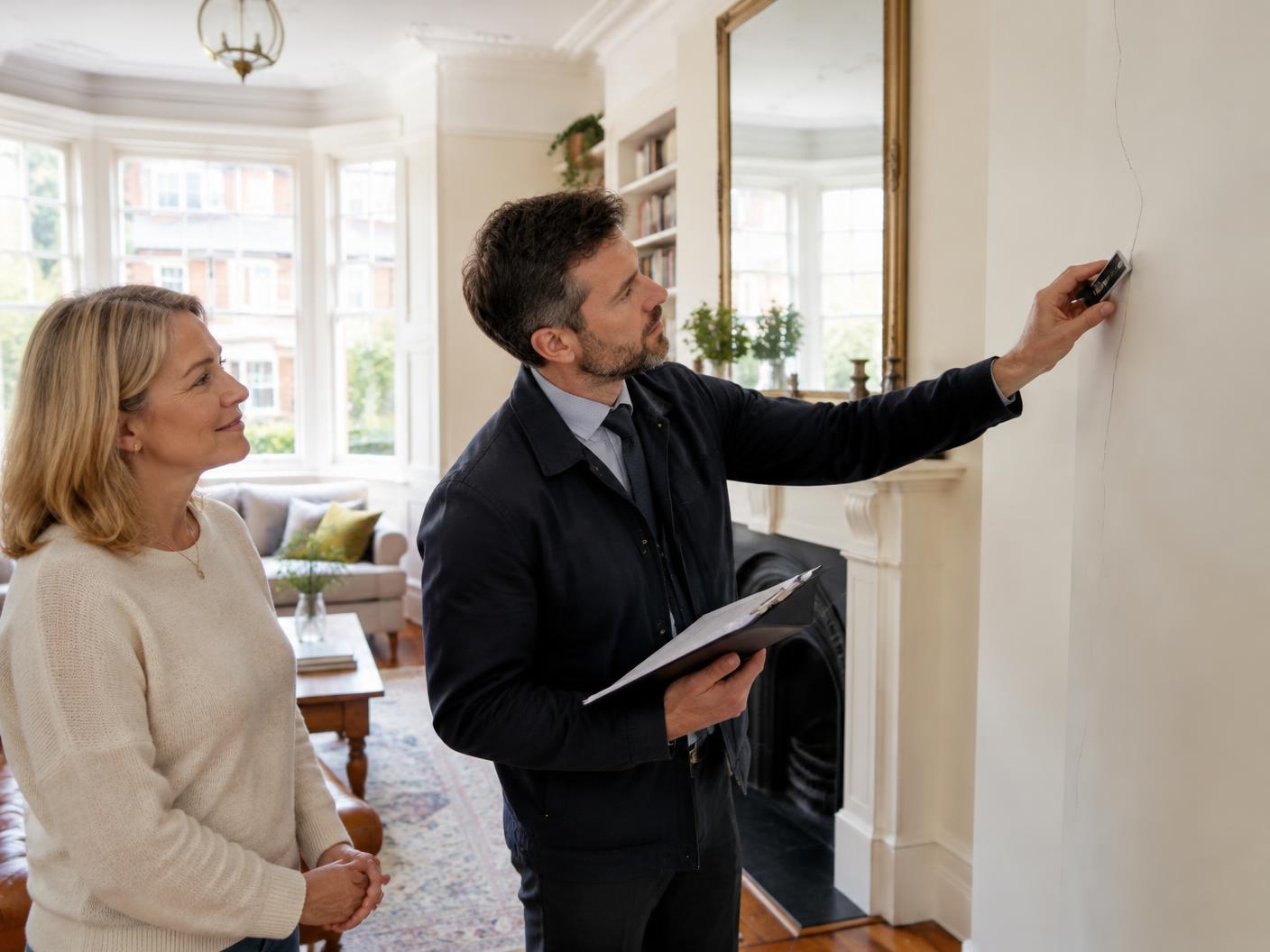
The record
A Schedule of Condition is a record of the existing condition of a property at a particular point in time.
For Party Wall matters, the inspection is normally focused on the relevant areas of the adjoining property adjacent to, or potentially affected by, the proposed works.
The surveyor records the visible condition of those areas in writing and with photographs before the building work begins.
If damage is subsequently alleged, the Schedule provides a useful record against which the later condition can be compared.
It isn’t a full building survey
A Party Wall Schedule of Condition records the condition of the relevant areas associated with the proposed works. It isn’t intended to provide a complete assessment of every part of the adjoining property.
Scope
The precise scope depends on the property and proposed works, but the Schedule will typically record the visible condition of relevant areas.
Existing cracking, staining, previous repairs, surface defects and finishes.
Visible defects to floor finishes, skirtings and surrounding areas.
The visible condition of relevant openings, frames, doors, fitted joinery and associated finishes.
Pre-existing cracks, movement, water staining, damage or other visible defects relevant to the inspection.
Where relevant to the proposed works, appropriate external areas can also be recorded.
Clear photographs accompany the written observations, creating a detailed visual record of the property’s condition at the time of inspection.
Why have one?
Building works can occasionally lead to questions about whether cracking or other defects were already present before the works began.
A Schedule of Condition establishes a record before those works commence.
It doesn’t prevent damage from occurring and doesn’t determine automatically whether later damage was caused by the works. What it provides is good contemporaneous evidence of the property’s pre-works condition.
It can help
The Act
Not automatically.
A Schedule of Condition is not itself a statutory requirement under the Party Wall etc. Act 1996.
However, it is commonly prepared as part of the Party Wall process because it provides both owners and the appointed surveyor or surveyors with a useful record of the adjoining property’s condition before notifiable works begin.
Whether one is appropriate will depend on the nature of the works and the circumstances of the property.
Honest advice comes first
If we don’t think a Schedule of Condition is necessary for your particular circumstances, we’ll tell you.
On the day
The inspection is straightforward and non-invasive. Your surveyor will attend the adjoining property and inspect the areas relevant to the proposed works.
Visible defects are recorded through written notes and photographs. Depending on the property and works, this may include internal areas, external areas or both.
The inspection does not involve opening up the building or carrying out destructive investigations. For a typical residential Party Wall Schedule of Condition, the site inspection can usually be completed efficiently with minimal disruption to the occupier.
What will you receive?
A clear record of the property, inspection date and relevant areas inspected.
Room-by-room or area-by-area descriptions of the visible condition and existing defects.
Supporting photographs documenting the condition at the date of inspection.
A professionally prepared report that can be retained with the Party Wall records and referred back to if required.
Where appropriate and practicable, additional external photographic or drone records can also support the inspection.
Beyond ground-level photography
Some parts of a property simply cannot be adequately seen from ground level.
Where appropriate, we can supplement our Schedule of Condition inspections with drone photography to document visible roof coverings, parapets, chimney stacks, concealed valleys and other elevated areas before neighbouring building work begins.
This can be particularly useful for traditional London properties with inverted or butterfly roofs, as well as taller three- and four-storey buildings.
The additional photographs can provide useful evidence of existing visible conditions should questions arise during or after construction.
The standard residential Schedule of Condition fee remains £350 + VAT per adjoining property. Supplementary drone photography may be included where appropriate and practicable, subject to the agreed inspection scope.
More extensive aerial inspections may require a separate quotation.
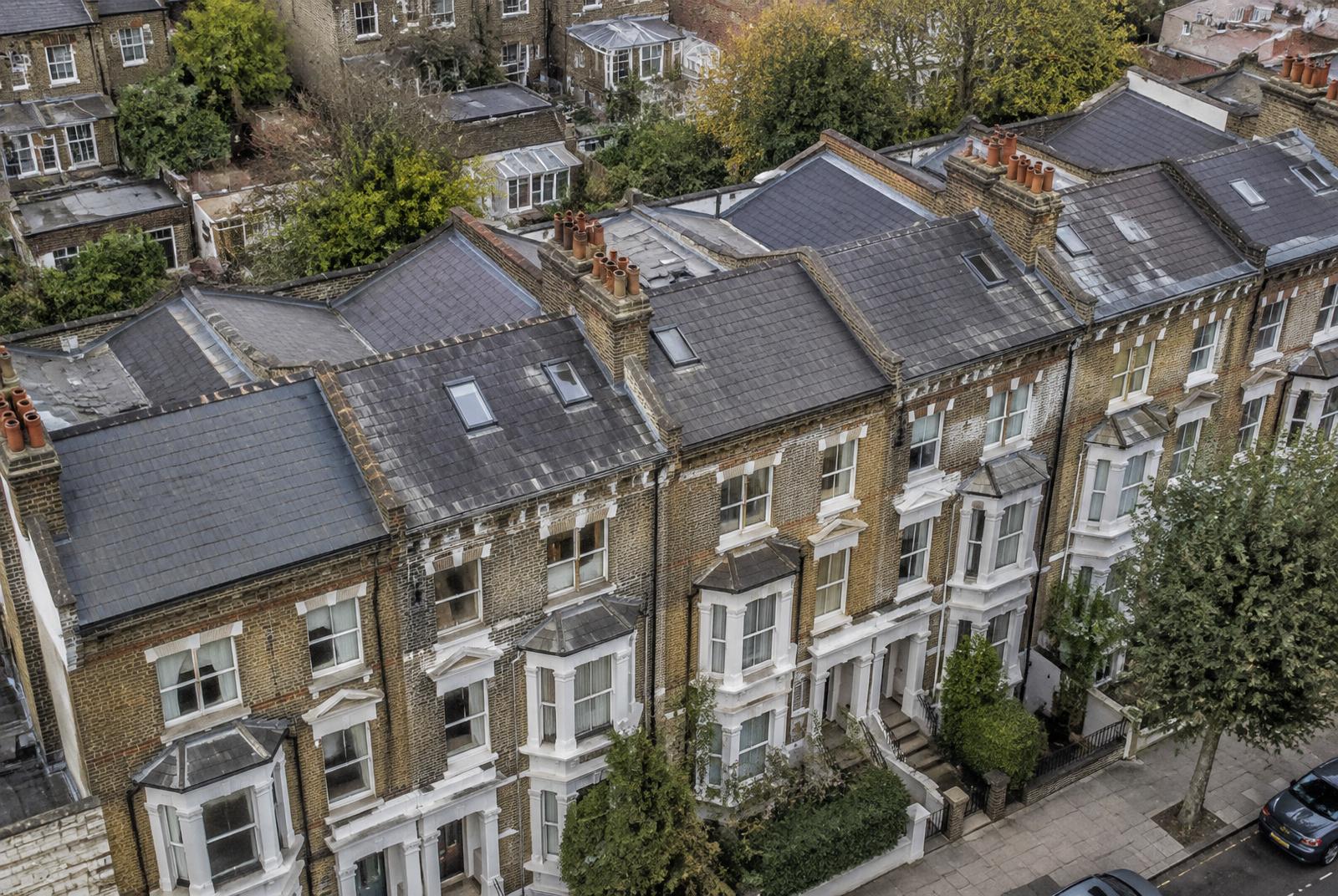
Photographic views of roof coverings, parapets, chimney stacks and roof valleys where accessible and visible.
A more complete photographic record of relevant visible conditions before construction begins.
Useful for taller terraced properties and traditional roof arrangements that can be difficult to assess from street level.
Drone photography is undertaken only where safe, practical and permitted, and is subject to site conditions and applicable operational restrictions. It supplements the visual inspection and does not constitute a comprehensive roof or structural survey.
Process
Request your survey
Tell us the property details and give us your preferred inspection dates.
We arrange access
We review availability and confirm the appointment and access arrangements with the relevant parties.
We inspect
Your surveyor attends the adjoining property and records the relevant areas in writing and photographs.
We prepare the Schedule
The inspection notes and photographs are compiled into the written Schedule of Condition.
The record is retained
The completed Schedule provides a clear record of the property’s condition before the relevant building works commence.
Fees
Residential Schedule of Condition
£350 + VAT
Per adjoining property
Applies where an Adjoining Owner consents but requests a Schedule of Condition, or for a standalone inspection. Where we act on a standard residential first Award (£699 + VAT or £799 + VAT), the Schedule of Condition is already included and is not charged again.
The fixed fee includes:
If your project affects multiple adjoining properties, we may be able to inspect them during the same visit.
Where multiple inspections can be arranged together, we can usually offer a reduced combined fixed fee. This may apply, for example, where two neighbouring properties or multiple flats can be inspected consecutively on the same visit.
Tell us how many properties require an inspection when you request the survey and we’ll confirm the total fixed fee before booking.
Two routes, one fee
A Schedule of Condition is commonly prepared as part of a Party Wall matter, but you can also instruct us to prepare a condition record independently where an appropriate pre-works record is required.
If the inspection forms part of an existing Christopher Anthony Surveyors Party Wall matter, provide your project reference when requesting the survey and we’ll link it to the existing file.
Both routes use the same fee: £350 + VAT per adjoining property, unless we confirm a reduced combined fee for multiple inspections.
Request an inspection
Tell us about the property and when you’d prefer the inspection to take place. We’ll review availability and confirm the appointment with you.
£350 + VAT per adjoining property
Reduced combined fees may be available when inspections can be arranged together.
Who inspects
Depending on your location and the nature of the project, the inspection will be undertaken by Tony Neilson MFPWS MRPSA or Chris Jack MFPWS MPTS.
We focus on clear, useful condition records supported by comprehensive photographic evidence — not unnecessarily complicated reports.
Your completed Schedule is prepared as if questions arise during or after the works.
Frequently asked questions
No. A Schedule of Condition is not itself a statutory requirement under the Party Wall etc. Act 1996. It is commonly prepared because it provides a useful record of the adjoining property’s condition before works begin.
Not normally for a Party Wall Schedule of Condition. The inspection generally concentrates on the relevant areas of the adjoining property adjacent to, or potentially affected by, the proposed works. The appropriate scope depends on the particular project.
Our standard residential Schedule of Condition fee is £350 + VAT per adjoining property, including the inspection, photographic record and written report. This fee applies where an Adjoining Owner consents but requests a Schedule of Condition, or where we're instructed to carry out a standalone inspection. Our standard residential first Award fees (£699 + VAT Building Owner Surveyor and £799 + VAT Agreed Surveyor) already include the Schedule of Condition within the agreed inspection scope, so it is not charged again.
Where multiple inspections can be arranged together on the same visit, we can usually offer a reduced combined fixed fee. Send us the property details and we’ll confirm the total before booking.
It depends on the areas that need to be recorded and the condition of the property. We keep the inspection efficient while ensuring the relevant areas are properly documented.
Where the Schedule forms part of a Party Wall Award, it can form part of the Party Wall records available to the relevant owners and appointed surveyors. The precise circulation will depend on the Party Wall matter.
The Schedule can be used to compare the property’s later condition with the written and photographic record made before the works. Whether any particular damage was caused by the works will depend on the circumstances and evidence.
Yes, where external areas are relevant to the proposed works they can be included within the scope of the inspection.
Where appropriate and practicable, drone photography can be used to supplement the condition record for relevant external areas. It isn’t required for every inspection.
Yes. Ideally the Schedule should be completed sufficiently close to the start of the relevant works to provide a useful record of the property’s pre-works condition.
Yes. The booking form allows you to provide up to three preferred dates and a morning, afternoon or flexible time preference. These are requests rather than confirmed appointments. We’ll review availability and confirm the inspection arrangements with you within one working day.
A professional written and photographic Schedule of Condition gives both owners a clear record to refer back to once building works are underway.
£350 + VAT per adjoining property
Multiple adjoining properties? Ask us about a reduced combined fee where inspections can be arranged together.
Tell us the property details and your preferred dates. We’ll confirm the inspection arrangements with you.
Practical guidance from our Party Wall Surveyors to help you understand the process and your options.

Costs & Surveyors
Learn how a written and photographic condition record can help reduce disputes about damage during neighbouring building work.
Read guide: What Is a Schedule of Condition and Do I Need One?
Received a Notice
Concerned about cracks or damage caused by building work next door? Understand the importance of evidence and the Party Wall process.
Read guide: What Happens If My Neighbour's Building Work Causes Damage?
Received a Notice
Understand what a Party Wall Notice means, your response options and what happens if you consent or appoint a surveyor.
Read guide: Received a Party Wall Notice? Your Options Explained