That formal letter from your neighbour isn't a legal threat; it's actually your strongest tool for property protection. If you've just received party wall notice what to do is likely the only question on your mind. It’s natural to feel a sense of unease when legal jargon arrives on your doorstep. You might worry about potential damage to your foundations or the fear of being landed with unexpected surveyor costs. You need clear, expert guidance to ensure your home remains safe during the works.
At Christopher Anthony Surveyors, we believe clarity is the antidote to anxiety. This guide will walk you through the exact steps to take to uphold your rights whilst ensuring your neighbour remains responsible for all professional fees. You'll discover how to respond effectively, why a Schedule of Condition is your best insurance policy, and how to navigate the process without the stress. We'll demystify the Party Wall etc. Act 1996 so you can move forward with total confidence. Let's turn this procedural hurdle into a robust safeguard for your property.
Under the Party Wall etc. Act 1996, your neighbour must notify you before starting specific works. This isn't a request for permission; it's a legal obligation to protect both properties. Once you've received party wall notice what to do is act quickly. You have a 14-day statutory window to respond. Missing this deadline doesn't stop the builders. Instead, it triggers a "deemed dispute" under the Act. This means you lose the opportunity to consent smoothly, and the process moves into a formal, mandatory surveyor appointment phase.
There are three primary notices you might see:
Don't assume the document is correct just because it looks official. A valid notice must include the correct names of all legal owners, the property addresses, a clear description of the work, and a proposed start date. For excavation work, it must include a plan and section drawings showing the depth of the new foundations. If any of these are missing, the notice is technically invalid. A flawed notice can cause significant delays and legal headaches later. As an Adjoining Owner, you should seek a professional review immediately. In most cases, your neighbour will be responsible for the professional fees associated with these checks.
Once you've identified the notice type, you face a critical decision. If you've received party wall notice what to do involves choosing between three distinct legal paths. Your choice impacts your protection levels and the project's timeline. According to the official government guidance on the Party Wall Act, you have the right to protect your interests without incurring personal costs. The law ensures you aren't financially penalised for your neighbour's development.
Your response generally falls into three categories:
A common misconception is that professional protection is expensive. It isn't. The Building Owner (your neighbour) is typically responsible for all surveyor fees. You get expert representation for free. If you're unsure about the process, you can explore our fixed-fee transparency to see how we manage these appointments and protect your home.
Don't let the word "dissent" worry you. It isn't an unneighbourly act. It's a technical term meaning you want a formal agreement in place. This results in a Party Wall Award. This legal document outlines exactly how and when works happen. It provides a pre-agreed framework for repairs if damage occurs. You won't be left chasing a neighbour for compensation; the Award handles it. It's the ultimate safeguard for your home.
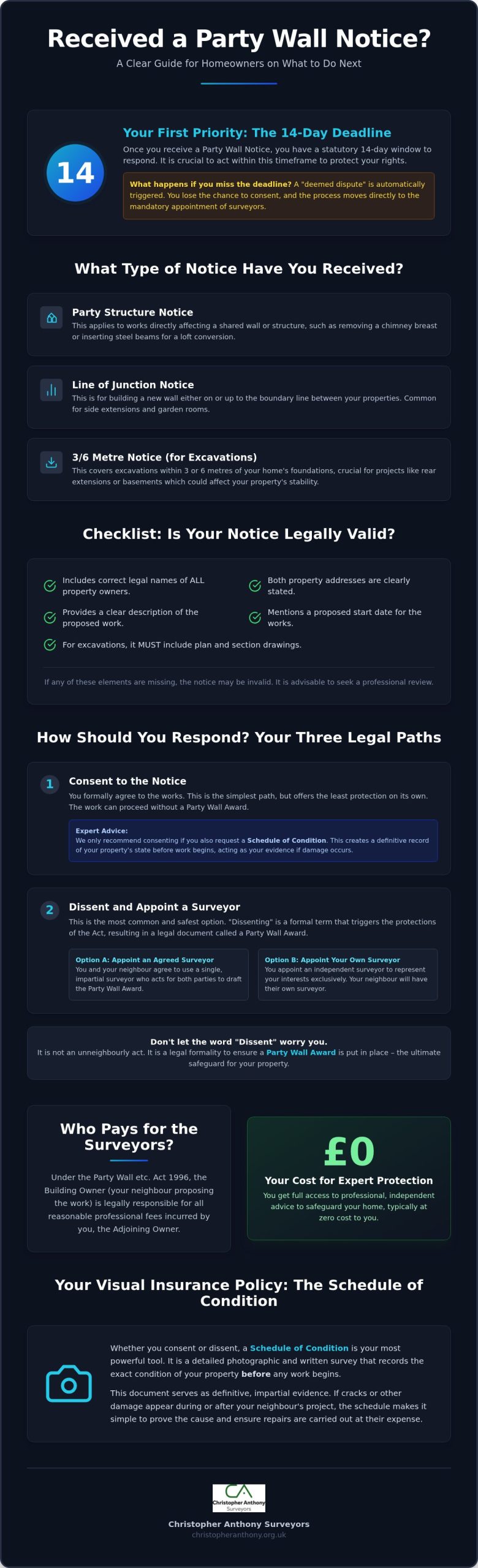
Having received party wall notice what to do now involves creating a definitive baseline for your home. The most effective way to do this is through a Schedule of Condition survey. This document is a detailed photographic and written record of your property's interior and exterior state before any work begins. It acts as a visual insurance policy. By following RICS guidance on party wall procedures, we ensure the record is robust enough to stand up in a legal dispute.
The process is straightforward and non-invasive. A surveyor visits your home to inspect the areas closest to the proposed works. They document every pre-existing hairline crack, decorative blemish, and structural detail. This record is then formally agreed upon with your neighbour's surveyor. This level of precision prevents "denials" of damage from your neighbour later. It also protects them from "frivolous" claims for issues that were already there. It's a fair, transparent safeguard for both parties that removes guesswork from the equation.
Book your Schedule of Condition survey today
If you notice a new crack or damp patch during the construction, don't worry. The surveyor will return to re-inspect your property against the original Schedule of Condition. If the evidence shows the work caused the issue, the Party Wall Award provides the solution. This legal document dictates exactly how the neighbour must organise and pay for repairs. You won't be left with a repair bill or a damaged home. The surveyor ensures all remedial work meets a professional standard, restoring your property to its original state without any financial burden on you.
Communication is key. Whilst the legal notice feels formal, it shouldn't replace a friendly chat over the fence. Maintaining a good relationship with your neighbour helps the entire project run more smoothly. However, don't let a polite conversation lead to a rushed decision. We often see homeowners pressured into signing "Consent" on the doorstep without fully understanding the implications. Always take the document inside and review it. If you've received party wall notice what to do is seek professional advice before putting pen to paper.
Verification is your next step. Check if the notice accurately reflects the proposed works, such as a loft conversion or a rear extension. These specific projects require precise details regarding beam pockets or foundation depths. For a deeper dive into your legal protections, read our Adjoining Owner Pillar. It explains how to ensure your rights remain the priority throughout the construction programme.
Speed is essential once the 14-day clock starts. If you don't appoint a surveyor or consent within this timeframe, a "dispute" is deemed to have arisen. If you remain silent, your neighbour can eventually use the Section 10(4) appointment process. This allows them to choose a surveyor to act on your behalf. To maintain control and ensure your interests are truly protected, you should appoint your own Adjoining Owner Surveyor promptly.
Finally, avoid the temptation to use a generic online template for your response. These documents often lack the specific clauses needed to trigger your full rights under the Act. A bespoke response ensures your neighbour remains responsible for all professional fees and that a Schedule of Condition is mandatory. Professional representation ensures the process remains transparent and efficient from day one.
Managing the complexities of the Party Wall etc. Act 1996 doesn't have to be a source of stress. You can take control. If you've received party wall notice what to do next is to act decisively to secure your legal rights. Remember the 14-day deadline is your most critical milestone. By choosing to dissent and requesting a professional Schedule of Condition, you create a robust safety net. This ensures any damage is documented and repaired at your neighbour's expense.
As London and Hertfordshire experts, we specialise in protecting Adjoining Owners through fixed-fee transparency. You deserve a surveyor who acts as your proactive guide. We ensure every detail of the proposed work is scrutinised for your safety. Don't leave your property to chance. If you need advice about your project, we're here to help.
Request a fixed-fee quotation or use our Party Wall Assistant tool today.
Your peace of mind is our priority. We're here to ensure your rights are upheld and your home remains protected throughout your neighbour's project.
No, you typically won't pay a penny. The Building Owner undertaking the work is responsible for all reasonable costs associated with your surveyor. This includes the time spent reviewing the notice, conducting a Schedule of Condition, and drafting the final Award. It's a statutory safeguard ensuring that Adjoining Owners aren't financially penalised or left without expert protection during a neighbour's construction project.
You cannot stop a neighbour from exercising their legal rights under the Act, such as building an extension. However, you can influence the timing and manner of the works. A surveyor ensures the proposed methods are safe and won't cause unnecessary damage. If they haven't followed the law or served a notice, you might have grounds for an injunction, but the Act itself facilitates development.
If you've received party wall notice what to do is respond promptly, because ignoring it triggers a "deemed dispute". After 14 days of silence, the law requires a surveyor to be appointed for you under Section 10(4). This means you lose the power to select your own representative. The project will still move forward, but you'll have less control over who protects your interests.
You have a statutory period of 14 days to respond to the notice. If you don't reply within this timeframe, you are deemed to have dissented. At this point, the dispute resolution process begins automatically. It's best to use this window to appoint a surveyor you trust, ensuring your property is professionally recorded and protected before any heavy machinery arrives on site.
No, these are two distinct legal requirements. Planning permission is granted by the local authority and focuses on land use and aesthetics. The Party Wall Act is a piece of civil legislation specifically concerned with structural safety and boundary rights. Even if your neighbour has planning permission, they cannot legally touch the shared wall or excavate near your home until the party wall process is complete.